Recent posts

20 May 2016
1 min read
Healthy Diets & Lifestyle

Yogurt consumption positively associated with healthy eating habits

diet quality dietary pattern healthy eating infogene study weight yogurt
Related posts
See More
Our Resources
Table of contents
Table of contents

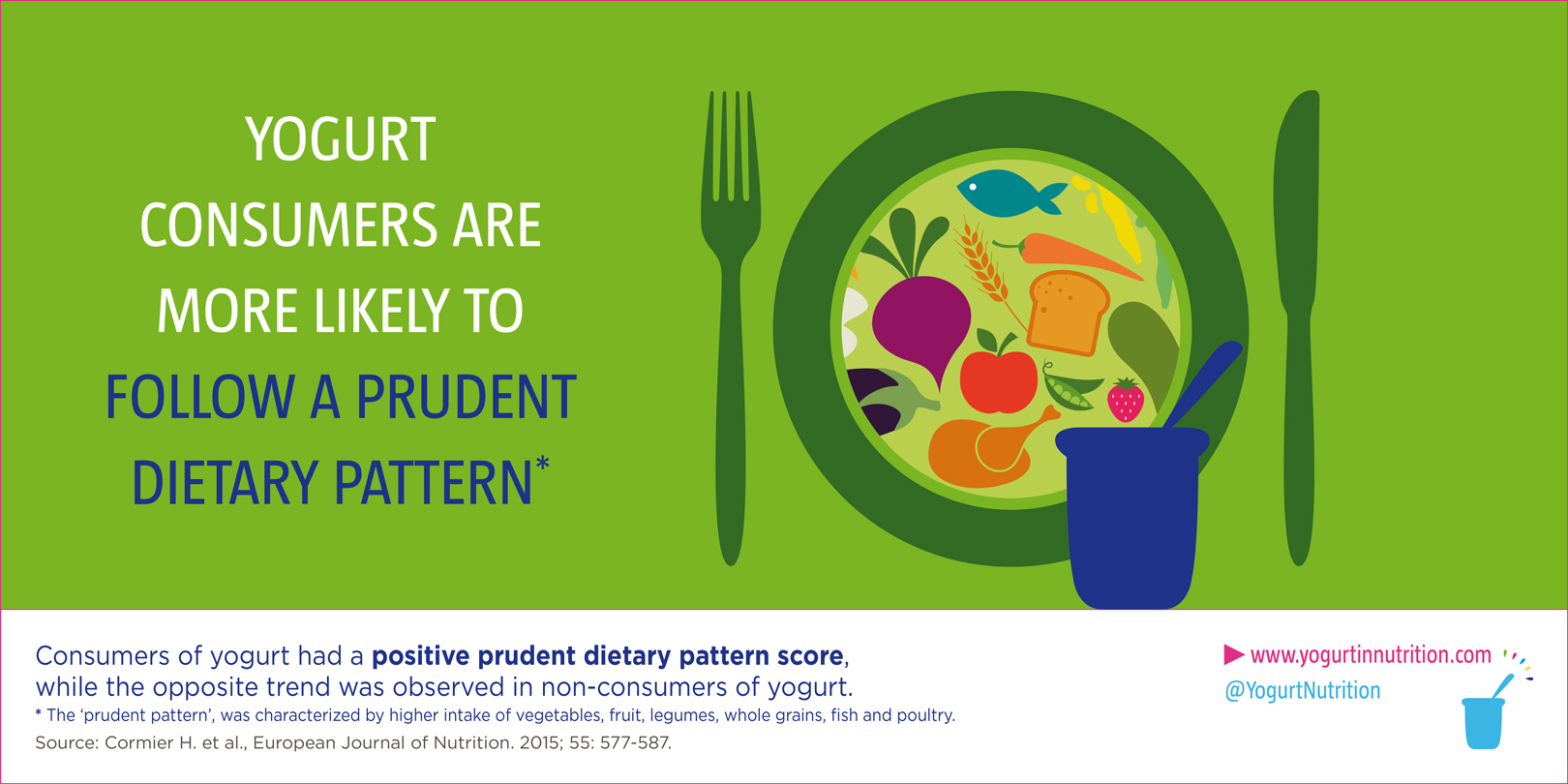
A publication in the European Journal of Nutrition examined to which extent yogurt intake is associated with healthy dietary patterns. The researchers found that yogurt consumption significantly contributes to the Prudent dietary pattern with lower fat and cholesterol intakes, and may be associated with healthy eating habits.

Learn here more about this study.

Source: Cormier H et al. Eur J Nutr. 2015 Mar 15. [Epub ahead of print]
20 May 2016
1 min read
Recipes

Fruit salad with yogurt honey-lime dressing

Anne Maunay fruit salad honey lime recipe yogurt yogurt dressing
Related posts
See More
Our Resources
Table of contents
Table of contents

It’s an easy way to start the day well and you can use any fruit you like with the yogurt honey-lime dressing. Discover the full recipe here.

Source and copyright: Anne Mauney
19 May 2016
2 min read
EB 2016 San Diego

Yogurt recipes take over #yogurt2016

diet health benefits healthy eating nutrition
Related posts
See More
Our Resources
Table of contents
Table of contents

Yogurt recipes made a great part of the Tasting Session. Sharing a meal is indeed the best way to talk with the person you were sitting next to at a symposium. The session was also a great opportunity to go through all the information shared during the scientific symposium and pinpoint key learnings on the health benefits of yogurt.

Yogurt is not only good for your health…

“Yogurt & type 2 diabetes: translating evidence into practice”. This year’s edition of the Yogurt in Nutrition Initiative symposium focused on the health benefits of yogurt, more specifically in the diabetes context. After the “evidence” part of the yearly symposium, 200 researchers and attendees were invited to a tasting session. It was up to 2 of our VIP guests to build a menu based on their own yogurt-based recipes.


Yogurt knowledge is good, yogurt recipes are tastier!

The tasting session offered several activities. First of them was eating! Healthy eating, to be more precise. Food writer Cheryl Sternman Rule and registered dietitian Hubert Cormier offered participants to try a variety of yogurt recipes, from Cheryl’s “Yogurt Culture” and Hubert’s “Ma Table Festive”. These yogurt delicacies ranged from lime-chicken with yogurt sauce to goat cheese, grape and pecan balls snacks. Besides recipes prepared by the two food writers, guests of the tasting session could also attend the “yogurt bar”. At the bar, everyone was invited to make their own yogurt compositions.

Promoting knowledge on the health benefits of yogurt

Next to the “tasting” activities, participants were invited to share key messages they received during the symposium. In the end, the tasting session illustrated the commitment of the Yogurt in Nutrition Initiative:

  • promoting knowledge on the health benefits of yogurt
  • promoting healthy eating and best nutrition practice
  • promoting fruitful and (tasteful!) exchanges with our community

Yogurt recipes and spreading nutrition knowledge

Yogurt recipes and health benefits sharing


16 May 2016
3 min read
EB 2016 San Diego

Yogurt would have public health benefits for Diabetes management

andrew prentice
Related posts
See More
Our Resources
Table of contents
Table of contents

Type 2 diabetes (T2DM) is a growing health problem worldwide. It puts a heavy burden on health care systems in a context of increasing pressure on resources. According to Andrew Prentice, the total costs on National Health Service (NHS) databases in UK represent £24 billion annually on health care and future projections estimated that total costs shall rise to £40b by 2035. Therefore, anything that can prevent people from developing T2D has the potential to save money and sustain Healthcare systems.

From science to modelization

Several studies have independently reported that higher yogurt consumption is associated with lower risk of T2DM with a meta-analysed hazard ratio of 0.82. This outcome has been used to investigate the reduction in T2DM health care expenditure that might be achievable through modest increases in yogurt consumption across the UK adult population. In details, the authors modeled the possible reductions in prevalence of T2DM and its associated health costs achievable through increasing yogurt consumption in UK adults from the current mean of 20g/d to 125g/d (equivalent to one pot). National age-specific prevalence rates were used to estimate the likelihood of people entering the model and age-related incidence rates for comorbidities were used to generate individual patient histories. Costs were applied for T2DM management costs, and the hospital and outpatient costs of treating T2DM-related complications. The perspective was that of the UK NHS, the time horizon was the patient’s lifetime. Health consequences of yogurt intake on quality-adjusted life years (QALY) were also calculated.

£2.3 billion over 25 years

Using highly conservative assumptions, Prentice’s team predicted that both mean savings to the NHS from reducing T2DM and related complications, and their treatment, as well as a gain of QALYs would be considerable. Actually, substantial savings to the UK could be achieved on National Healthcare Service: approximately £2.3 billion over 25 years (equivalent to 388,000 fewer cases of T2D). Moreover, a significant gain in quality of life might be achieved : 275,000 QALY’s gained and NHS would be prepared to pay £5.5bn for this gain. Prentice reached the conclusion that the promotion of yogurt consumption could, in the long term, contribute to a reduction in the prevalence of T2D, the associated burden of disease and related health costs. Therefore the potential public health impact of regular yogurt consumption through reducing T2DM and related health care expenditures would relieve pressure on the health care infrastructures.

Key-learnings

  • Current data suggest that the promotion of yogurt consumption could, in the long term, contribute to a reduction in the prevalence of T2D
  • Reducing the risk of developing T2D through increased yogurt consumption would relieve pressure on the health care infrastructures
13 May 2016
2 min read
EB 2016 San Diego Recipes

Passion fruit panna cotta

EB 2016 Hubert Cormier passion fruit recipe san diego summit yogurt yogurt tasting session
Related posts
See More
Our Resources
Table of contents
Table of contents

Ingredients (4 servings)

  • 60 ml (¼ of a cup) of cold water
  • 7 grams (1 sachet) of gelatin
  • 500 ml (2 cups) of vanilla Greek yogurt
  • 250 ml (1 cup) of milk
  • 250 ml (1 cup) of whipping cream (35% fat)
  • 60 ml (¼ of a cup) + 30 ml (2 tablespoons) of granulated sugar
  • 30 ml (2 tablespoons) of lemon juice
  • 4 passion fruits
  • 1 jalapeño pepper, chopped 

Preparation

  1. Drop the gelatin into the cold water and leave for 15 minutes.
  2. In a large bowl, mix the yogurt and half the milk and cream.
  3. In a small pan, bring the rest of the milk and cream to the boil and add 60 ml (¼ of a cup) of sugar and the jalapeño pepper.
  4. Remove from the heat and discard the pepper.
  5. Stir in the gelatin, which should dilute completely. Beat with a whisk.
  6. Pour the mixture into the bowl of yogurt and mix.
  7. Add the lemon juice.
  8. Divide the mixture into 4 glasses and refrigerate for a minimum of 2 hours.
  9. Scoop out the passion fruit pulp and cook it in a non-stick pan on medium heat. Add the remaining sugar and keep stirring.
  10. Decorate the panna cottas with the passion fruit syrup.
Source: Hubert Cormier – Ma table festive
Copyright: Hubert Cormier

13 May 2016
1 min read
Diabetes prevention EB 2016 San Diego

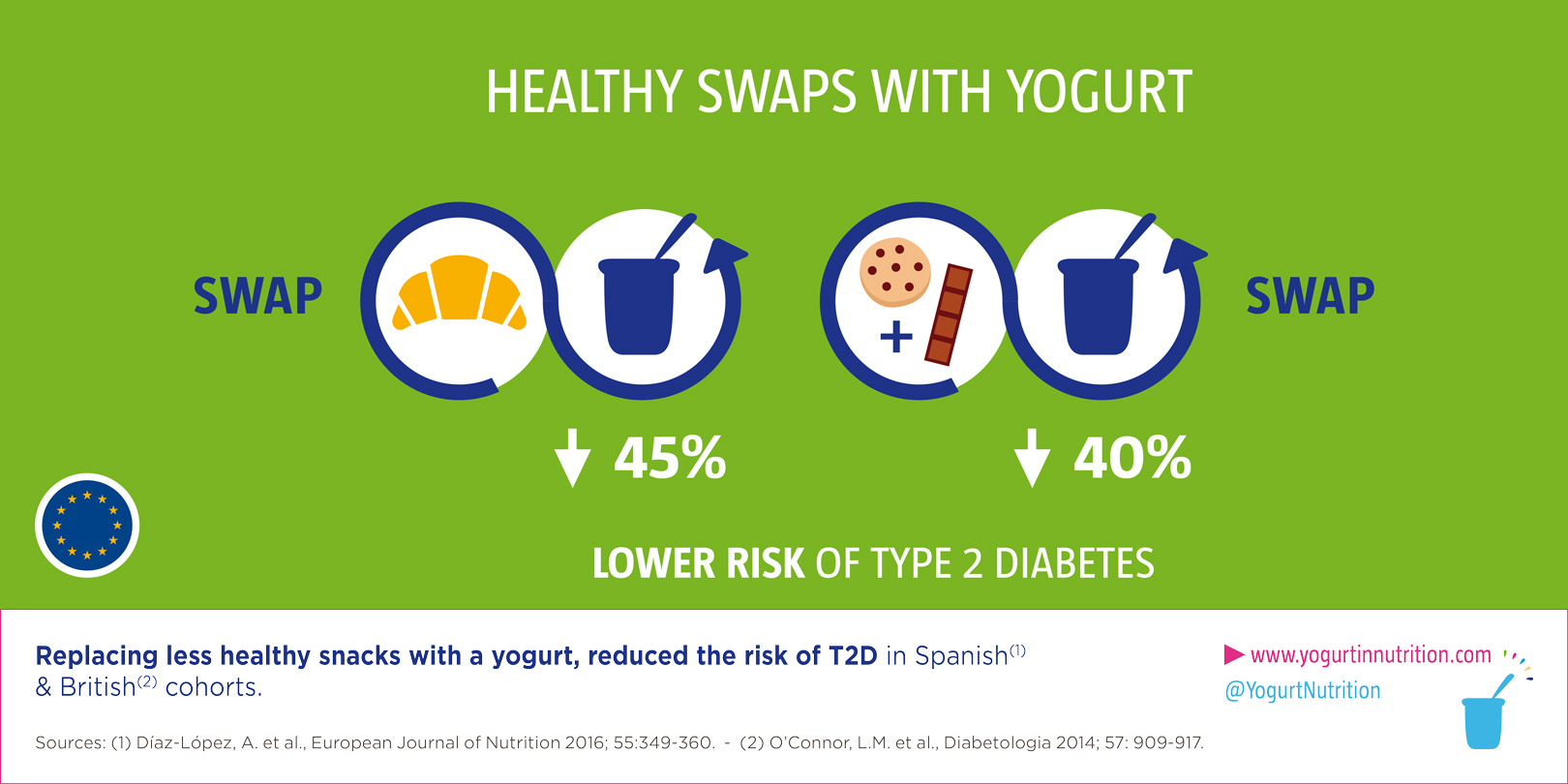
Snack swap to yogurt & reduce T2 Diabetes risk

brittish Diaz-Lopez EB 2016 healthy snacks O'Connor risk prevention san diego snacking spanish summit swap type 2 diabetes yogurt
Related posts
See More
Our Resources
Table of contents
Table of contents

Download here the complete infographic ‘Yogurt consumption & risk of Type 2 Diabetes’.

11 May 2016
3 min read
EB 2016 San Diego

Healthy Lifestyle & Yogurt Discussed

diet fermented fermented dairy healthy lifestyle metabolism nutrition well being yogurt
Related posts
See More
Our Resources
Table of contents
Table of contents

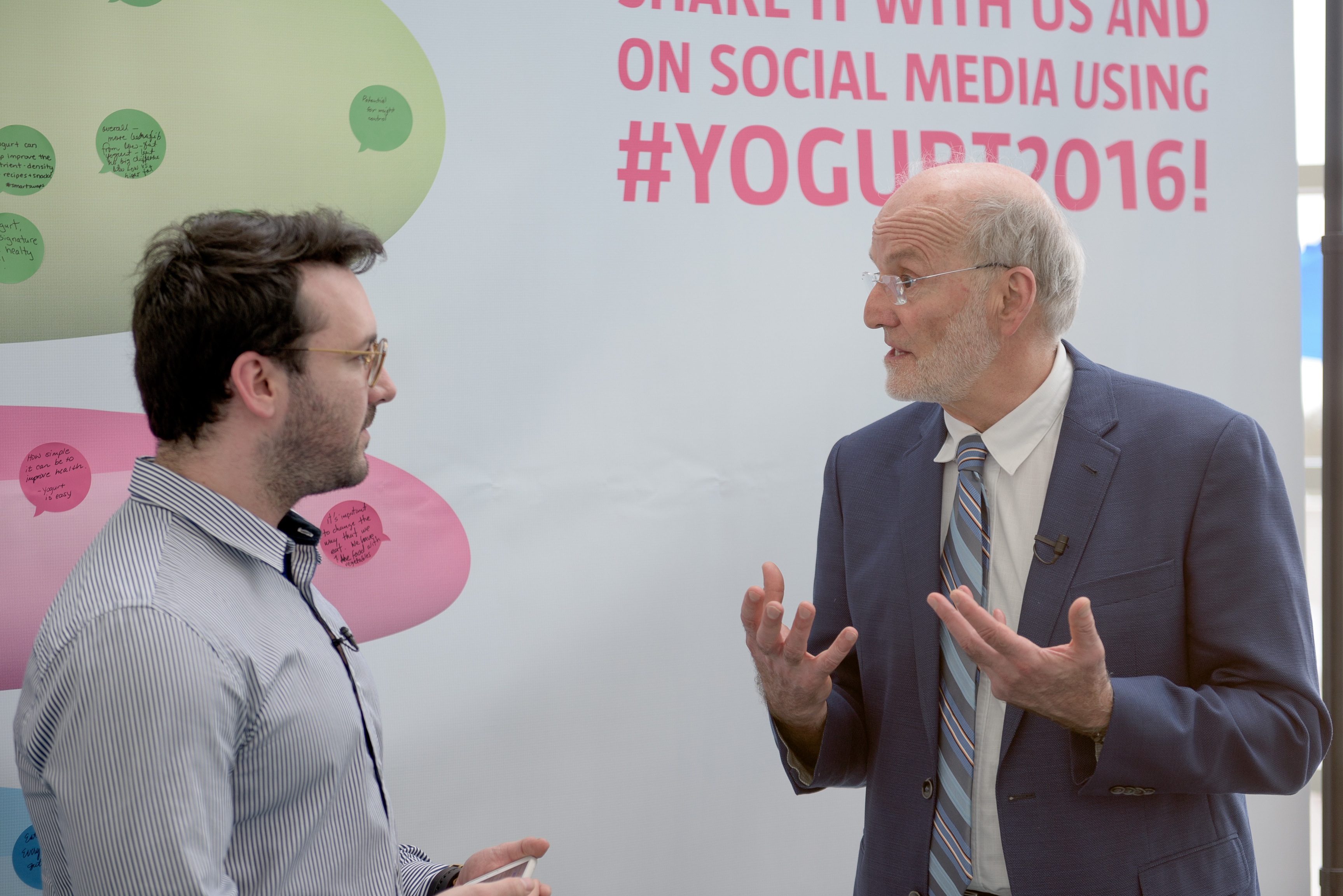
After his presentation at #yogurt2016, Professor Angelo Tremblay agreed to take questions from Nutritionist Hubert Cormier (@Hub_Nutrition on Twitter) on the meaning of Healthy Lifestyle.

First, Hubert asked Professor Angelo Tremblay to explain what is healthy lifestyle

A healthy lifestyle is a lifestyle that fits with the health of people

Healthy lifestyle belongs to a category of notions, which appear to be self explanatory. When preparing for the video interview, Hubert and Professor Tremblay were discussing this idea extensively. So Hubert decided to make the definition of healthy lifestyle, the first question of their interview. Professor Tremblay presented healthy lifestyle as one that contributes to prevent disease. In his view, this includes healthy life practices, metabolic and physical fitness, as well as global well being.


Hubert then asked Professor Tremblay what was the most ignored health benefit of yogurt

Yogurt is a fermented food!

Hubert opened this second question by pointing out that as a registered dietitian, he often recommends yogurt to his clients. Yogurt, he explained, is great to include in a healthy diet because it is nutrient-dense. “We hear a lot of good health benefits linked to the consumption of yogurt”, he said before the camera began to roll. “So what is, from your point of view Professor, one of yogurt’s characteristics we do not think about”, he asked.

Professor Tremblay immediately refered to yogurt’s status as a fermented food. The bacteria yogurt contains, he explained, probably influence the gut microbiota. By doing so, they most certainly have an impact on our metabolic health. This impact is generally considered as a health benefit. For the time being, Professor Tremblay calls for further research to bring even more evidence on this exciting topic.


Finally, Hubert invited Professor Angelo Tremblay to explain how yogurt could be linked to a healthy lifestyle

Yogurt is related to a global healthy lifestyle

Hubert and Angelo discussed the meaning of healthy lifestyle and the importance of yogurt as a fermented food. To go beyond nutrition, as Hubert says, they had to examine one obvious question: what does yogurt have to do with healthy lifestyle? Professor Tremblay said that this relationship certainly has a symbolic aspect. Indeed, data suggests that the average yogurt consumer seems to be a more physically active person, less likely be smoker, having a healthier diet…

So it seems that yogurt consumers live a little bit differently, with healthier habits, which, in the end, is all for the best.

10 May 2016
2 min read
Other YINI Symposium

YINI en México

Related posts
See More
Our Resources
Table of contents
Table of contents

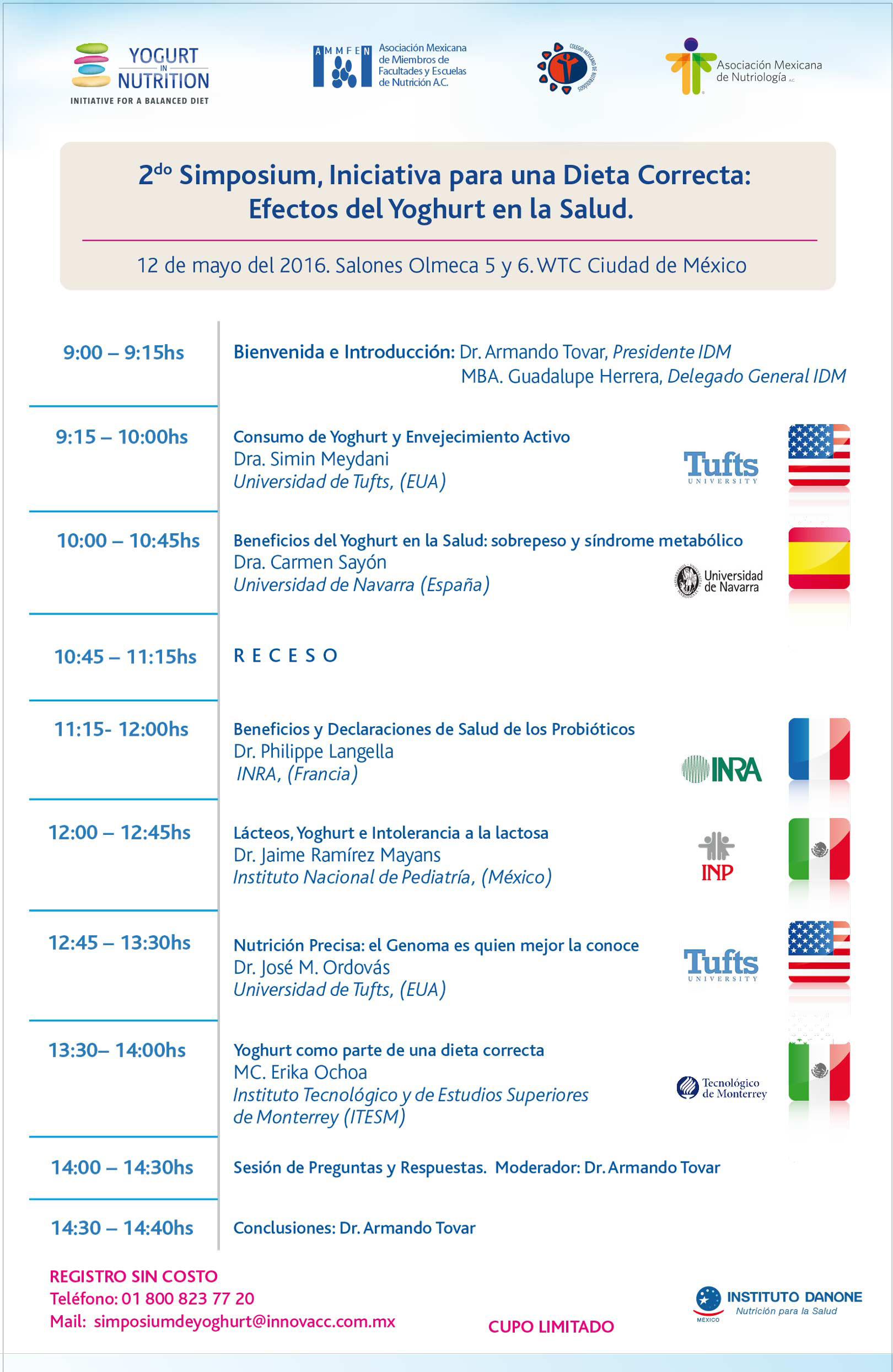
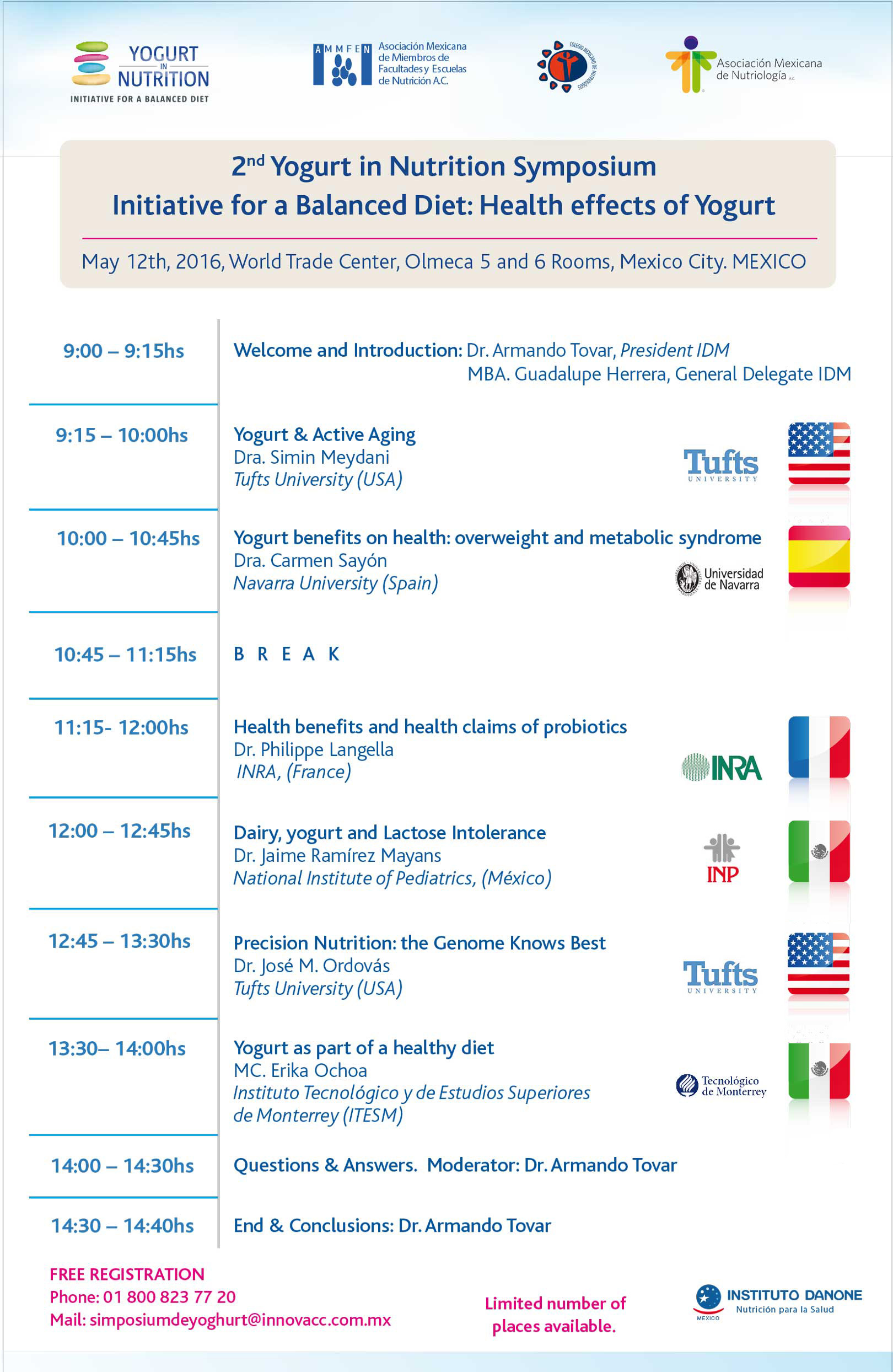
Por segunda ocasión, el simposium sobre los Efectos del Yoghurt en la Salud, llevado a cabo por la Yoghurt in Nutrition, Iniciativa para una Dieta Correcta, tendrá lugar este 12 de Mayo del 2016 en México DF.

El yoghurt es generalmente considerado como un alimento con posibles beneficios para la salud de quien lo consume. Sus efectos, van más allá del simple hecho de poder ser consumido por intolerantes a la lactosa. Las investigaciones epidemiológicas más recientes, han mostrado que el consumo de yoghurt tiene efectos positivos en el control de enfermedades de interés para la salud pública, como son la obesidad y la diabetes tipo 2. Por lo mismo, se considera que el yoghurt es indicativo de un estilo de vida saludable a cualquier edad.

Este simposium de carácter científico, se enfocará en discutir los efectos del yoghurt en la salud desde una perspectiva global, teniendo como ponentes a reconocidos científicos nacionales e internacionales.

Descubre aquí el programa y pregunta por el registro gratis, llamando al teléfono: 01 800 823 77 20 o al mail: simposiumdeyoghurt@innovacc.com.mx (cupo limitado).

Este evento cuenta con la participación de la Asociación Mexicana de Miembros de Facultades y Escuelas de Nutrición A.C., del Colegio Mexicano de Nutriólogos, de la Asociación Mexicana de Nutriología A.C. y del Instituto Danone.

Si no puedes asistir a las conferencias, mantente informado en #Yogurt2016 !

2do-Simposium-YINI-en-México_12-mayo-2016-1

09 May 2016
1 min read
Other YINI Symposium

YINI Mexican Symposium on Health effects of yogurt on May 12th !

Mexico
Related posts
See More
Our Resources
Table of contents
Table of contents
That yogurt might have a beneficial effect on consumers’ health is a generally held assumption. It’s interest is actually a much wider effect than in the management of lactose intolerance alone. Now recent epidemiological studies reported that yogurt consumption has positive effects on public health diseases such as obesity or type 2-diabetes and is a probably also a signature of a healthy lifestyle at any age.

The scientific symposium will focus on the global health effects of yogurt and will brings together scientists of international renown.Discover the program below and ask for your free registration by phone: 01 800 823 77 20 or mail: simposiumdeyoghurt@innovacc.com.mx (Limited number of places available).

This event is supported by Asociación Mexicana de Miembros de Facultades y Escuelas de Nutrición A.C., the Colegio Mexicano de Nutriólogos, the Asociación Mexicana de Nutriología A.C. and the Instituto Danone.

If you can’t join the conference stay tuned on #Yogurt2016 !

Find out more about the official program of the event

2nd Yoghurt Symposium in Mexico_YINI_May 12 2016

Documento en espagnol

09 May 2016
4 min read
EB 2016 San Diego

Yogurt : the perfect FIT for a healthy lifestyle ?

Angelo Tremblay healthy lifestyle
Related posts
See More
Our Resources
Table of contents
Table of contents

Dr. Angelo Tremblay (Laval University, Québec) summarized an overview of key findings from observational cohort studies, conducted in Europe, North and South America. Firstly, recent data clearly demonstrated that diet quality is improved in yogurt consumers, compared to non-yogurt consumers. Big US cohorts like NHANES and Framingham showed in both adults and children that frequent yogurt consumption is associated with higher intakes of key nutrients, like proteins, vitamins B2 and B12, calcium, magnesium, potassium and zinc, which is not the case for low yogurt consumers or those who don’t eat it at all.

These findings are also observed in British children, who regularly consume yogurt: the yogurt consumers showed that yogurt made a useful contribution to micronutrient intakes, particularly vitamin B12, riboflavin, calcium, iodine and phosphorus. According to another US cohort, substituting one serving of low sugar, whole milk yogurt paired with fruit or vegetables, for current snacks would increase children’s consumption of valuable nutrients without adding excess sugar or energy.

A better diet quality and metabolic profile

Yogurt consumption is associated with better diet quality and metabolic profile in both American adults and children. Those frequent consumers had significantly better diet quality than infrequent consumers. Specifically, they consumed more fruit, whole grains, and milk. In addition, yogurt consumers tend to eat less fast food, french fries and fried foods, processed and red meats, pizza, snacks, regular soft drinks or alcohol, indicating a better compliance to the dietary guidelines.

The propensity of yogurt consumers to exhibit some good dietary behaviors is also observed in French adults, who displayed more favorable dietary and nutritional intakes: more fruits, fish, legumes, nuts, water, and fibers, less prepared meals and less alcohol than low consumers. High yogurt consumers also exhibited better adequacy to the dietary recommended allowances for 11 micronutrients (vitamins B1, B2, B5, B6, B9, C, A and calcium, iodine, selenium, copper).

These findings are also conform with the results of the Canadian study Infogene, demonstrating that yogurt consumers are more prone to adhere to a Prudent dietary pattern, characterized by higher intakes of vegetables, fruits, nuts, non-hydrogenated fats , whereas non-consumers of yogurt tend to exhibit a Western pattern, characterized by higher intakes of fried foods, processed meats, refined grains, regular soft drinks, etc. Moreover, yogurt consumption was associated with lower body weight, waist-to-hip ratio, and waist circumference and tended to be associated with a lower BMI.

A wider influence on healthy lifestyle

Recent population studies have also raised the possibility that some foods, like yogurt, might have a symbolic value, according to which consumers of such foods display a healthier lifestyle. The results of the Quebec Family Study revealed that not only female yogurt consumers report a better diet quality than non-consumers, but they are also more physically active and are less likely to smoke. Yogurt consumers were also more likely to have a good knowledge of the food-health relationship and accustomed to reading food labels. All these behaviors are more compatible with body weight stability over time. According to other data outside US, yogurt consumption is associated with a healthier lifestyle in Brazilian population and in Italian population.

Yogurt was also recently shown to favorably influence satiety and to decrease subsequent energy intake. Its status as a fermented food confers properties that can be beneficial for body weight management.

Therefore, Professor Tremblay concluded his talk by saying that these data show that yogurt consumption is associated with a healthy eating pattern and lifestyle.

Key-learnings

  • Yogurt consumers have:
    • Better nutritional intakes
    • Healthier dietary patterns
    • Healthier lifestyle
    • more weight stability over time
  • For all those scientific reasons, yogurt consumption can be viewed as a signature of a healthy diet & lifestyle
Watch now the slideshow from Prof Angelo Tremblay: